Planning a Commercial Air Conditioning Installation in Adelaide
A commercial air conditioning system in Adelaide has a big job to do. It needs to keep staff and customers comfortable and hold up when summer temperatures climb into the 40s. That makes installation matter a lot more than buying a commercial air conditioner. The building, heat load, occupancy, operating hours, electrical supply and available space all need to be considered before choosing one.
If you’re planning a new installation or replacing an ageing system, understanding the process before work starts can help you budget properly and avoid problems later.
What Should You Consider Before Installing Commercial Air Conditioning?
Two buildings with similar floor areas, such as an office and a restaurant, can have very different cooling requirements. There are plenty of variables that affect the system load. Here are some of the main factors to consider:
| Factor | What It Affects |
|---|---|
| Building size and layout | System capacity, airflow and air conditioner placement |
| Occupancy | Cooling load and temperature control |
| Internal heat | Heat produced by lighting, computers, machinery and kitchen equipment |
| Operating hours | Air conditioner selection, running costs and maintenance requirements |
| Existing services | Electrical supply, ductwork, controls and available plant space |
| Future changes | Whether the system can accommodate changes to the building or business |
Good design starts with calculating what the building needs, not with selecting commercial air conditioners based only on floor area. Adelaide regularly experiences very high summer temperatures, including days above 40°C, so the system needs to be designed for the conditions it’ll actually face.
Budget matters too, but the purchase price is only part of the cost. You should also consider energy use, maintenance, access to parts and the air conditioner’s expected service life. If you’re still deciding which system suits your building, our guide to Choosing Between Split System vs Ducted Air Conditioners covers that decision separately.
How Much Does Commercial Air Conditioning Installation Cost?
There’s no standard price for commercial air conditioning installation because the cost depends on the building and the system it needs. The main factors that affect the price include:
- The type and capacity of the system
- The number of areas or zones being cooled
- Whether existing air conditioners need to be removed
- Ductwork, pipework and electrical upgrades
- Access to the site and plant areas, including any lifting equipment
- Whether work needs to be completed after hours or in stages
A site assessment is the most reliable way to get an accurate figure, as it shows exactly what the installation will involve.
How Does a Commercial Air Conditioning Installation Work?
The exact process depends on the project’s size and type, but a commercial installation normally moves through four stages. Larger projects involving multiple areas, central plant, VRV/VRF systems or chillers require more planning and may be carried out in phases.
1. Site Assessment
The site needs to be properly assessed before any commercial air conditioners are selected. This means looking at the building layout and how each area is used. The assessment also covers existing air conditioning and ventilation equipment, available plant space, electrical requirements and access for installation and future servicing.
Where will the air conditioners go? How will technicians access them? Can the existing electrical infrastructure support the new system? Can the work be completed without disrupting normal operations? Sorting these details out early reduces surprises once installation begins.
2. System Design and Sizing
Sizing must account for occupancy, orientation, glazing, equipment, lighting, ventilation and other sources of internal heat. A system that appears adequate under average conditions can struggle when an extended period of high temperatures puts the building under its greatest cooling demand.
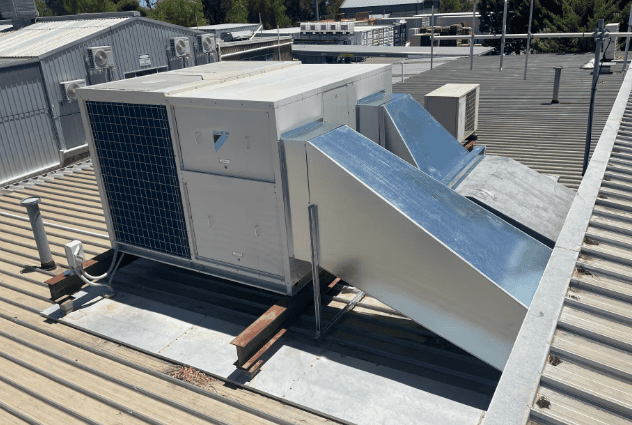
The type of system also depends on the building. Commercial projects can use split and ducted systems as well as packaged units, VRV/VRF, chillers and other large-scale HVAC plant. Our commercial air conditioning brands service covers system design and air conditioner selection for these projects.
When comparing commercial air conditioners, consider capacity, system type, efficiency, parts availability and ongoing service requirements. BOSSY works with a range of established manufacturers, and you can see the commercial air conditioning brands available before discussing options for your project.
3. Quotation and Project Planning
Once the design is established, the scope of work, choice of air conditioners, costs and expected timeframe should be clear. A smaller commercial installation may take a few days, while a larger project involving multiple areas or staged works can take considerably longer. This is also the point to discuss access, deliveries, lifting equipment, electrical work and any other site requirements. For an operating business, timing matters as much as the installation itself.
4. Installation and Commissioning
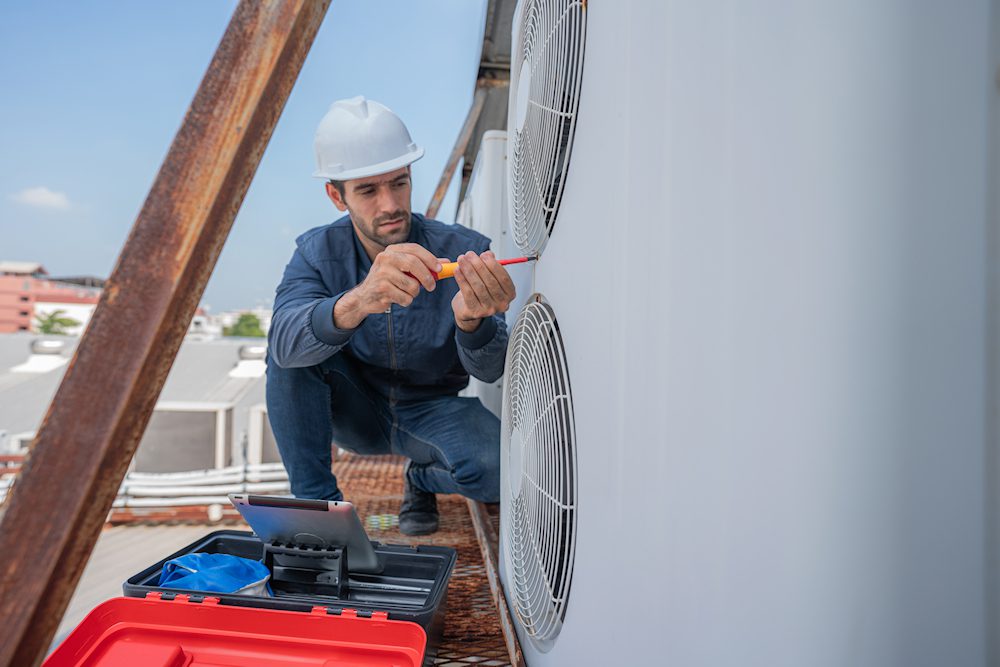
Once the project is ready to proceed, the team can install and connect the air conditioners. Depending on the system, this may involve refrigeration pipework, electrical connections, ductwork, controls, drainage, air conditioner mounting and integration with existing systems. Refrigeration and electrical work need to be carried out by licensed personnel.
The job isn’t finished when the air conditioners are switched on. The system needs to be tested and commissioned to check that it operates correctly. This can include checking airflow, temperatures, controls, operating pressures and other system parameters. For larger systems, commissioning records can also provide useful information for future servicing and performance checks.
How Can You Minimise Disruption During Installation?
A commercial building doesn’t necessarily need to stop operating while air conditioning work is underway. Depending on the project, you can schedule installation outside normal trading hours or around a planned shutdown. Before work begins, discuss:
- Which areas need to remain operational
- When staff and customers will be on site
- Whether noisy work needs to be completed outside business hours
- How air conditioners and materials will enter the building
- Whether temporary cooling is required
- Whether the work can be completed in stages
Agree the installation schedule upfront, especially where air conditioning is critical to the building’s operation.
What Licensing and Compliance Requirements Apply?
Air conditioning installation involves regulated work, so check that your installer holds the right licences.
Refrigerant Handling
Work involving refrigerants is regulated nationally. Anyone installing, commissioning, servicing or maintaining equipment that involves refrigerant handling needs a Refrigerant Handling Licence. These are issued by the Australian Refrigeration Council (ARC) on behalf of the Australian Government.
South Australian Licensing
Air conditioning installation and electrical work must also meet South Australian licensing requirements. Consumer and Business Services (CBS)provides information on these licences, which vary with the type and scope of work.
Licensed electrical workers should carry out electrical work in line with AS/NZS 3000. When engaging a contractor, ask which licences they hold and who will do the work. You can also check a contractor’s details on the CBS licence register
What Should Happen After Installation?
Commercial systems often operate for long periods, and dirty filters, blocked coils, worn components or control problems can affect performance and increase the load on the system. Regular servicing helps identify issues before they become larger problems. Most commercial systems should be serviced at least twice a year, although heavily used systems or those in dusty or demanding environments may need more frequent attention.
A planned maintenance program can include:
- Cleaning: filters and coils
- Performance testing: efficiency analysis, air and water balancing, and airflow and temperature checks
- System inspection: electrical and control system checks, plus identifying worn or faulty components
Our commercial air conditioning maintenance guide explains what regular servicing involves and why it matters for commercial systems.
What If the Air Conditioning Breaks Down?
A breakdown can cause real problems when air conditioning is essential to your operation. A failed system can affect staff and customers or create problems for equipment and temperature-sensitive environments. Hospitals, food businesses and other critical sites may have additional reasons to need a rapid response.
Access to a technician who understands commercial systems can help reduce downtime and identify the cause of the fault. BOSSY’s provides 24/7 emergency air conditioning repairs as part of its commercial air conditioning service and maintenance offering.
Why Use BOSSY’s for Commercial Air Conditioning?
Planning an installation is easier when the same team handles the project from the first site assessment through to servicing the system years later. BOSSY’s is family-owned and has more than 30 years of experience in commercial air conditioning and refrigeration across Adelaide and South Australia. Our in-house team handles design, installation, servicing and repairs, along with refrigeration and electrical work, so you don’t need to bring in separate contractors.
Whether you’re planning a commercial air conditioning installation in Adelaide or upgrading an existing system, contact us today to learn more.